We live in a world full of wicked problems. We face them at a global scale with Climate Change and Rapidly Advancing AI and at an individual scale with most Knowledge Work. This is a central theme in David Epstein's book Range: wicked problems are distinctly challenging and Generalists excel at finding solutions. It is not always clear when we're dealing with a wicked problem, so developing the awareness and intuition to identify them can be valuable in figuring out how to address them.
Not everyone agrees on a definition for the term wicked problem. It was originally coined by Horst W. J. Rittel & Melvin M. Webber in a paper about urban planning titled "Dilemmas in a general theory of planning." Since then it has grown in popularity but sometimes gets diluted just to mean hard problems. Part of the challenge is that this term actually refers to a spectrum between wicked and kind problems. This means problems can be more wicked or less wicked, more kind or less kind.
Wicked problems are complex problems with no single solution. They have ambiguous rules, many stakeholders, and often competing incentives. Solutions to wicked problems are generally good or bad rather than true or false. Perhaps the most challenging characteristic is that they have slow or inaccurate Feedback Loops, making it hard or impossible to judge the quality of solutions. Wicked domains include medicine, the justice system, leadership, and most knowledge work.
This is contrasted with kind problems, in which you get immediate feedback as you engage with the problem. With kind problems experience inevitably leads to expertise, practice makes perfect. A golfer who swings their club knows right away if it was done well or not.
There are two common mistakes with wicked problems:
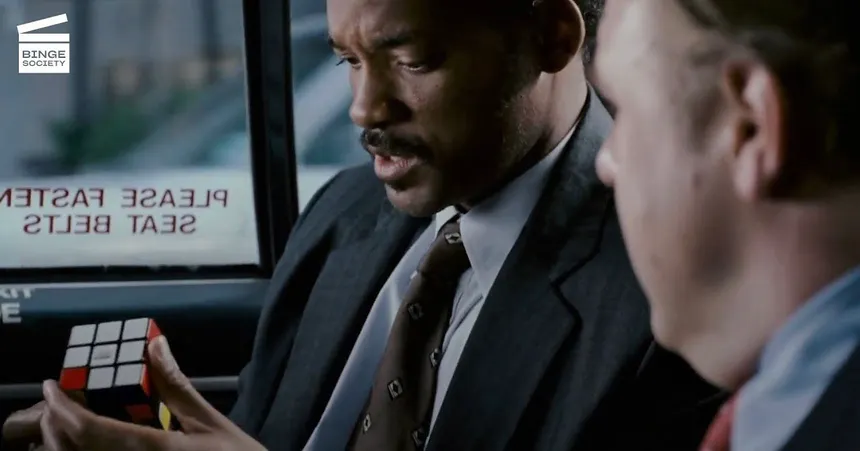
- Complex Is Often Not Wicked: It can be easy to confuse the two because complexity is mistaken for belonging only to wicked problems. A Rubix Cube is clearly a complex puzzle, but it is also a kind problem. You get good at solving the Rubix Cube by memorizing patterns and you get quick feedback when you play with it.
- Kind Experts are Often Not Wicked Experts: We see expertise with kind problems as transferrable to wicked problems, but they are not. Like when Will Smith gets an internship as a stockbroker (wicked) because he solves a Rubix Cube (kind) in The Pursuit of Happiness.
- Diary of a CEO: David Epstein on Wicked Problemsopen.spotify.com
- pp. 20, 213
- Thinking in Systems: A PrimerDonella H. Meadowsp. 189

