We predict and simulate the world and respond to error in our prediction, this is called Predictive Processing or Predictive Coding. We do not, in fact we often cannot, respond to the direct input from the world. Your perceptions of the world are anchored in your predictions, which are then tested against incoming sensory input.
Watch the video below through the Federer Illusion for a brief explanation.
The physics are good evidence, but there are also biological clues that our brain works this way. Your brain has 10x more connections sending data from the Visual Cortex to the Thalamus than it does from the retina to the Visual Cortex via the Thalamus. And 90% of all connections coming into the Visual Cortex come from other parts of the cortex. This fits the pattern than most of our experience is prediction and tested against a comparatively small amount of sensory input.
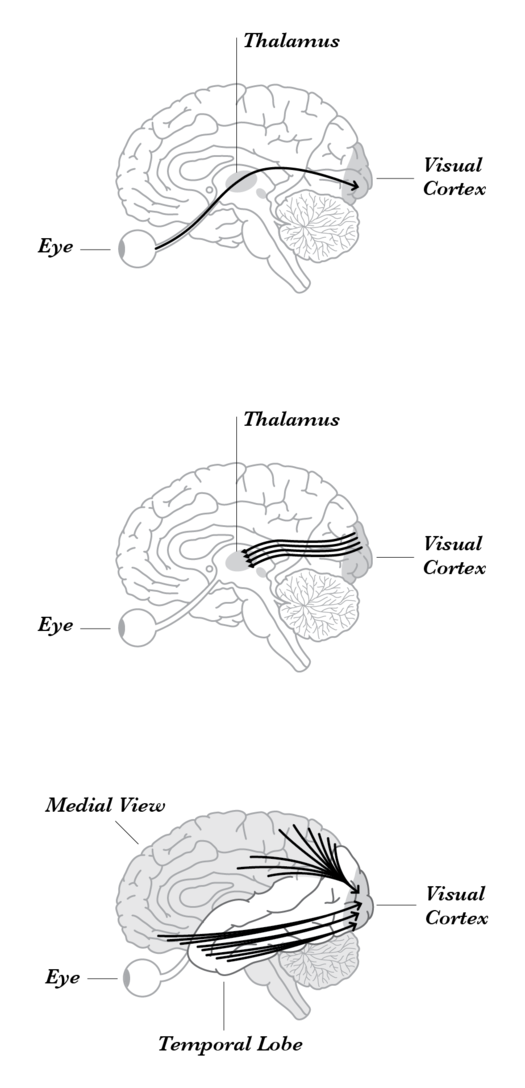
- How Emotions Are Made: Vision Detailshow-emotions-are-made.com
- How Emotions Are Made: The Secret Life of the BrainLisa Feldman Barrettquoted
